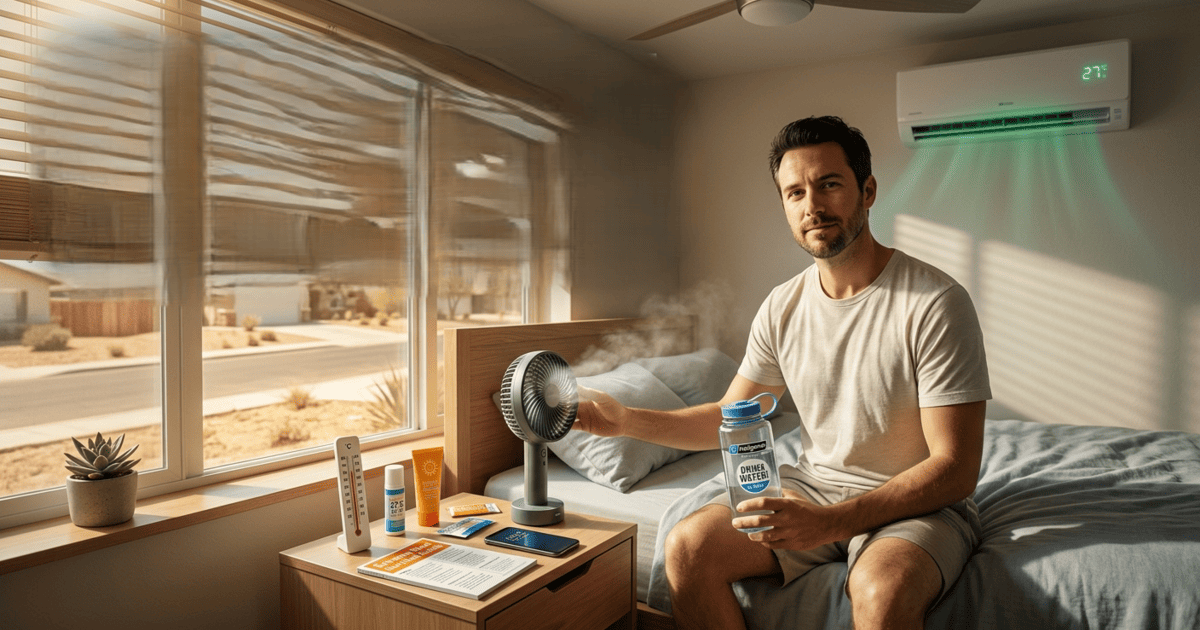

45 degrees Celsius. That is not a weather forecast. That is an oven.
And if you have never experienced it, here is what it feels like: the air burns your lungs when you breathe. Metal surfaces — door handles, car steering wheels, railings — become untouchable. The road shimmers. Your phone overheats and shuts itself down. And that is just outdoors. Inside, without AC, your house becomes a slow cooker.
I live in a region where 40-45°C summers are normal. Not a freak event. Not a “record-breaking heatwave.” Just May and June. Every year. You either learn to survive extreme heat or you suffer through it.
Most heat safety guides are written by people in air-conditioned offices quoting CDC statistics. This one is written by someone who has had their AC fail during a 47°C day and had to figure things out in real time. If you genuinely want to survive extreme heat — not just read about it — this is the guide you need.
Expand with your specific heat experience — the day your AC failed, what you did differently, what you learned. Did anyone in your family or neighbourhood get heat exhaustion? What traditional methods did your family use? The more specific, the better.
Why You Must Learn to Survive Extreme Heat
Heat does not make dramatic headlines like floods or cyclones. No satellite images, no rescue helicopters on TV. But here is the uncomfortable fact: heat kills more people globally than any other natural disaster.
Over 60,000 people died from heat-related causes in Europe alone during the 2022 summer. India loses thousands every year — many unreported because heat death is often recorded as “natural causes.” Learning to survive extreme heat is not optional if you live in a hot climate. It is a basic life skill.
Your body maintains a core temperature of about 37°C. When the air around you exceeds that, your cooling system — sweating — starts to fail. Add humidity above 60%, and sweat cannot evaporate. Your body literally cannot cool itself.
That is when things go wrong. Fast.
Heat Exhaustion vs Heat Stroke: This Distinction Saves Lives
Most people confuse these. They are not the same thing. One is a warning. The other is a medical emergency.
| Sign | Heat Exhaustion | Heat Stroke |
|---|---|---|
| Skin | Cool, clammy, heavy sweating | Hot, red, DRY (sweating stops) |
| Temperature | Below 40°C | 40°C or higher |
| Mental state | Tired, dizzy but alert | Confused, slurred speech, unconscious |
| Pulse | Fast, weak | Fast, strong |
| Action | Move to shade, hydrate, cool skin | Call emergency services NOW |
The critical sign: If someone stops sweating in extreme heat and their skin becomes hot and dry — that is heat stroke. Do not wait. Do not “see if they improve.” Call for help immediately while cooling them with whatever you have — wet cloth, water, fan, anything.
Medical Disclaimer: Heat stroke has a mortality rate of 10-50% if untreated. This is not something to take lightly.
How to Survive Extreme Heat Without AC: 10 Methods That Work
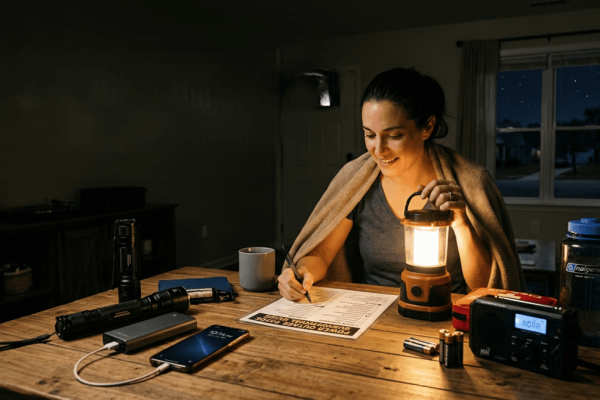
Not everyone has AC. And even if you do, power cuts during heat waves are common — the grid overloads precisely when you need cooling most. If you have experienced a power outage during summer, you know exactly what this feels like. Here is what works when electricity is unreliable or unavailable.
1. Wet cloth on windows. Hang a wet bedsheet or towel over open windows. As the breeze passes through, evaporation drops the air temperature. Old technique from Indian villages. Still works better than most gadgets.
2. Cross-ventilation. Open windows on opposite sides of the house. Place a fan at one window blowing outward — it pulls hot air out and draws cooler air from the other side. Best used in early morning and after sunset.
3. Earthen pot water (matka). Clay pot keeps water naturally cool through evaporation. No electricity needed. A Rs 200 pot does what a Rs 15,000 water cooler does — just slower. Been working for thousands of years.
4. Sleep on the floor. Heat rises. The floor is the coolest surface in your home. During power cuts in summer, this is standard practice across India. Not glamorous. Effective.
5. Cool your pulse points. Apply cold water or a wet cloth to your wrists, neck, inner elbows, and ankles. Major blood vessels run close to the surface there. Cooling those spots cools your entire body faster than anything else.
6. Close curtains during the day. Sunlight through windows heats a room by 5-10°C. Close curtains or hang thick cloth on sun-facing windows from 10 AM to 5 PM. Open everything after sunset.
7. Limit cooking indoors. A stove or oven adds significant heat to your home. Cook early morning or eat cold meals during peak heat days. Roti and sabzi can wait until evening.
8. Desert cooler or air cooler. An evaporative cooler (Rs 3,000-8,000 / $50-150) uses water evaporation to cool air. Works well in dry heat. Does not work well in humid climates — that is the trade-off.
9. Spend afternoon hours in cooled public spaces. Malls, libraries, movie theatres, temples, gurudwaras — all are air-conditioned. During extreme heat, spending 3-4 afternoon hours in a public cooled space can prevent heat illness entirely.
10. Take cold showers. Two to three times a day if needed. Even just wetting your hair and clothes before sitting in front of a fan makes a massive difference. Do not worry about looking put-together during a heat wave. Worry about not overheating.
Hydration: The Numbers That Matter
Dehydration during extreme heat is not just “feeling thirsty.” It degrades your body’s ability to cool itself, concentrate, and function. By the time you feel thirsty, you are already mildly dehydrated.
Daily water intake during extreme heat:
| Situation | Minimum Water |
|---|---|
| Sedentary, indoors | 3-4 litres |
| Light activity, indoors | 4-5 litres |
| Working outdoors | 6-8 litres (1 litre every 15-20 minutes during heavy work) |
| Children | 1.5-2 litres (more frequent, smaller amounts) |
| Elderly | 2-3 litres (they often forget to drink — remind them) |
What to drink: – Water. Plain water. That is the answer 90% of the time. – ORS (Oral Rehydration Solution) — Rs 10 a packet, available at any pharmacy. Better than any sports drink. – Buttermilk (chaas), coconut water, nimbu pani (lemon water with salt and sugar). These replace both water and electrolytes naturally.
What to avoid: – Alcohol. It dehydrates you faster. – Excessive tea and coffee. Mild diuretics that increase water loss. – Sugary sodas. They feel refreshing but do not hydrate effectively. – Ice-cold water in large amounts. Can cause stomach cramps. Cool is fine. Ice-cold in big gulps is not.
Protecting Vulnerable People
Heat does not affect everyone equally. Some people are at much higher risk.
Elderly (65+): Their temperature regulation is weaker. They often do not feel thirsty until they are already dehydrated. Check on elderly neighbours and family members every few hours during extreme heat. Do not just call — visit. They may not tell you they are struggling.
Children under 5: Small bodies heat up 3-5 times faster than adults. Never leave children in a parked car — interior temperature reaches 60°C+ within minutes, even with windows cracked. This kills children every year.
Outdoor workers: Construction workers, delivery drivers, farm labourers — they have no choice but to be outside. Employers should provide water, shade, and mandatory rest breaks. If you employ anyone who works outdoors, this is your responsibility.
Pets: Dogs and cats cannot sweat. They cool themselves by panting, which is far less efficient. Signs of heat stroke in pets include excessive panting, drooling, lethargy, and vomiting. Move them to shade, apply cool (not cold) water, and get to a vet.
People on medication: Blood pressure medications, antihistamines, and some psychiatric medications affect the body’s ability to regulate temperature. If you take any regular medication, ask your doctor how heat affects it.
The bottom line — to survive extreme heat, you need to think about more than just yourself. The people around you may need your help more than you realize.
What to Wear and When to Go Outside
Clothing: – Loose, light-coloured cotton. White reflects heat, black absorbs it. Loose fabric allows air circulation. – Wet your t-shirt or dupatta before going out. Evaporation keeps you cool for 20-30 minutes. – Wide-brimmed hat or umbrella. Your head absorbs the most direct sunlight.
Timing: – Avoid outdoor activity between 11 AM and 4 PM. This is non-negotiable during 40°C+ days. – If you must go out, do it before 8 AM or after 6 PM. – If you work outdoors, the 20/20 rule: 20 minutes of work, then 20 minutes in shade with water.
Emergency Cooling: When Someone Overheats
If someone shows signs of heat exhaustion or heat stroke, every minute counts.
Immediate steps: 1. Move them to shade or indoors. Any cooled space. 2. Lay them down. Elevate feet slightly. 3. Remove excess clothing. 4. Apply cold wet cloths to neck, armpits, and groin (major blood vessel areas). 5. Fan them while applying wet cloths — this accelerates evaporative cooling. 6. Give small sips of cool water — ONLY if they are conscious and alert. 7. If they are confused, unconscious, or not improving after 15 minutes — call emergency services immediately.
Do NOT: Give ice baths (can cause shock). Do not give fluids to unconscious person. Do not leave them alone “to rest.”
Heat Wave Preparedness: Your Checklist to Survive Extreme Heat
-
Stock water. Minimum 4 litres per person per day. Keep a 3-day supply.
-
Buy ORS packets. Rs 10 each. Keep 10 packets at home. Worth more than any energy drink.
-
Check your cooling. AC serviced? Cooler water pad replaced? Fans working? Do this before summer, not during.
-
Identify a cool public space. Mall, library, community center. Know where you will go if your home becomes too hot.
-
Prepare light meals. Stock food that does not require cooking — fruits, bread, yogurt, salads.
-
Close sun-facing windows. Thick curtains or reflective film on windows makes a real difference.
-
Know heat stroke signs. Hot dry skin, confusion, high temperature. Print the comparison table above and stick it on your fridge.
-
Check on vulnerable people. Elderly family, neighbours living alone, anyone without AC. A 5-minute visit can save a life.
-
Keep electronics cool. Phones and laptops overheat in extreme heat. Keep them out of direct sunlight and off charging during peak temperatures.
-
Have a backup plan for power cuts. If AC fails during a heat wave, you need plan B ready — not something you figure out in the moment.
Key Takeaways
-
Learning to survive extreme heat is a basic life skill in hot climates. Heat kills more people than floods, cyclones, and storms combined — it just does it quietly.
-
Heat exhaustion is a warning. Heat stroke is an emergency. Learn the difference — hot dry skin with confusion means call for help immediately.
-
You do not need AC to survive extreme heat. Wet cloth on windows, earthen pot water, floor sleeping, and cold showers work. People have survived 45°C+ for centuries without electricity.
-
Drink 3-4 litres minimum daily during heat waves. ORS, buttermilk, and nimbu pani are better than expensive sports drinks.
-
The 11 AM to 4 PM window is the danger zone. Stay indoors if possible. If you must go out, follow the 20/20 rule.
-
Check on elderly people, children, outdoor workers, and pets. They cannot always help themselves.
-
Preparation costs almost nothing — water storage, ORS packets, curtains, a wet towel. You can survive extreme heat with zero budget. The investment is awareness, not money.
Note: Product prices mentioned in this article are approximate and may vary. This article provides general safety information for educational purposes only. It is not a substitute for official emergency guidance from government agencies or medical professionals.
Further Reading:
This article provides general safety information for educational purposes only. It is not a substitute for official emergency guidance. Always follow instructions from local emergency services. See our full Disclaimer.