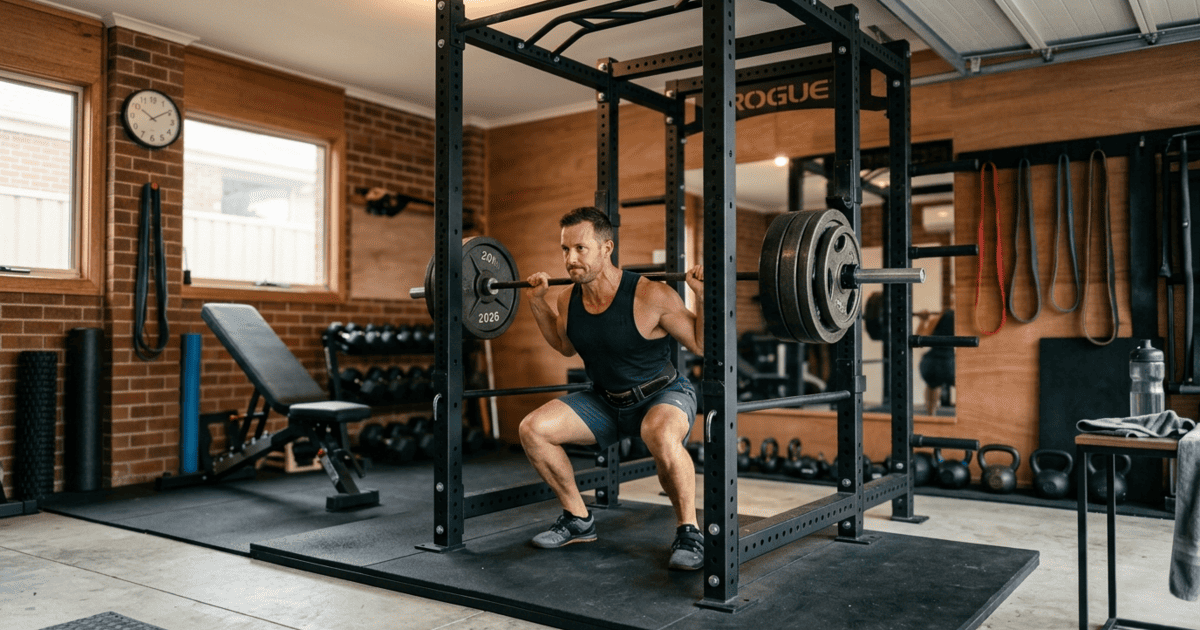

Best Power Racks for Home Gym (2026) — Tested and Compared
If you are searching for the best power racks for home gym training, here is the short answer: the REP Fitness PR-1000 is the right pick for most people. Solid build, everything included, 00. If budget is not a concern and you want something you will never outgrow, get the Rogue R-3. Done.
Now, if you want to know why — and whether one of the other four racks might suit your situation better — keep reading. This is not a spec sheet. This is real talk from someone who trains at home.
I spent three months researching power racks before setting up my home gym. The biggest lesson? The rack you buy determines every other decision — bar height, plate storage, even which accessories you can add later. Getting this wrong is expensive.
Why a Power Rack is Worth It (And When It is Not)
Here is some math. A decent gym membership runs 0-60 per month. That is 80-720 per year. A 00 power rack pays for itself in under 8 months. A 95 Rogue pays for itself in about 14 months. After that? Free training for life. No commute. No waiting for the squat rack.
You only need a handful of movements to build serious strength at home. Squats, bench press, overhead press, pull-ups, barbell rows, dips. A power rack handles all of them. Pair it with a barbell, plates, and a flat bench, and you cover 90% of what a commercial gym offers.
But here is where most “buy a power rack” articles lose credibility. They never tell you when to skip it.
Do not buy a power rack if:
- You only train with dumbbells or kettlebells — you do not need one
- Your primary training is cardio or bodyweight — save the money and space
- You do not own a barbell and plates — the rack is useless without them
- You genuinely cannot spare a 4×4 foot area in your home — be honest with yourself
A standard rack takes up about 16 square feet of floor space, plus clearance on both sides for plate loading. Most people make it work in a garage corner, spare bedroom, or basement. But measure twice and have the conversation with your household first.
For everyone else — anyone who trains with a barbell even twice a week — one of the best power racks for home gym training is the single smartest investment you will make. Not even close.
The Only Things That Actually Matter When Choosing
Forget the marketing. When you are shopping for the best power racks for home gym setups, only a few things genuinely matter day to day.
Stability under load. Everything starts here. A rack that wobbles when you rerack a heavy squat is dangerous. Stability comes from steel thickness, base width, and whether the rack is bolted down. Marketing numbers mean nothing if the rack flexes when you use it.
Safety catches that actually work. Your life depends on this during solo bench press. Seriously. If you train alone, the safety bars are what keep a failed rep from pinning you to the bench. Test them before you ever go heavy.
Ceiling height and floor space. Measure your ceiling, subtract 6 inches minimum, and that is your maximum rack height. A 90-inch rack does not fit in a room with a 90-inch ceiling.
Can you add accessories later? Think 2 years ahead. Right now you want squats and bench. In a year, you will want a lat pulldown. If your rack has no accessory ecosystem, you are replacing the whole thing.
Steel gauge explained simply. Lower number means thicker steel.
- 11-gauge (3mm): Tank. Commercial grade. Zero flex.
- 12-gauge (2.6mm): Excellent for home use.
- 14-gauge (1.9mm): Fine for most lifters under 400 pounds loaded.
Hole spacing matters more than you think. Westside hole spacing means 1-inch spacing through the bench zone, letting you dial in J-cup height precisely. Standard 2-inch spacing works for squats but can leave you awkward for bench.
Think of choosing the best power racks for home gym use like a friend explaining it over coffee. Ignore the flashy stuff. Focus on: will this hold the weight, will it keep me safe, does it fit my room, and can I grow with it?
Best Power Racks for Home Gym: Quick Comparison
| Rack | Best For | Price | Weight Capacity | Steel |
|---|---|---|---|---|
| Rogue Fitness R-3 | Best Overall | 95 | 1,000 lbs | 11-gauge |
| REP Fitness PR-1000 | Best Value | 00 | 700 lbs | 14-gauge |
| Fitness Reality Squat Rack | Best Budget | 99 | 800 lbs | 14-gauge |
| Titan Fitness T-3 Folding | Best Space-Saving | 00 | 1,100 lbs | 11-gauge |
| REP PR-1050 Short | Best for Low Ceilings | 59 | 700 lbs | 14-gauge |
| Sunny Health Power Zone | Best All-in-One | 68 | 1,000 lbs | 12-gauge |
Prices are approximate and may vary by seller and availability.
Best Power Racks for Home Gym: Detailed Reviews
1. Rogue Fitness R-3 — Best Overall
Price: ~95 | Capacity: 1,000 lbs | Steel: 11-gauge | Height: 90.375”
The Rogue R-3 is the rack that most serious home gym owners end up with. Built from 2×3-inch 11-gauge steel, it has virtually zero flex even under heavy loads. You can feel the difference the moment you rerack a barbell. Solid. Confident. No wobble.
Westside hole spacing through the bench zone gives you precise J-cup placement. The 1,000-pound capacity means you will never outgrow it.
What sets Rogue apart is the attachment ecosystem. Monster Lite lat pulldown, dip station, belt squat, plate storage — the list keeps growing. Buy this rack once, keep it for 20 years.
The downside is price. At 95 base (before J-cups, safeties, and shipping), you are looking at roughly ,000 all-in. Overkill for casual lifters. Worth every penny for serious ones.
Pros: – 11-gauge steel — commercial-grade construction – Westside hole spacing for precise bench positioning – Massive accessory ecosystem – Made in the USA – Lifetime of use with no capacity concerns
Cons: – 95 base price does not include J-cups or safeties on all configurations – Heavy shipping costs – Overkill if you lift under 300 pounds
2. REP Fitness PR-1000 — Best Value
Price: ~00 | Capacity: 700 lbs | Steel: 14-gauge | Height: 84”
The PR-1000 hits the sweet spot. At 00, it comes with J-cups, safety bars, and a multi-grip pull-up bar included. No surprise add-on costs. The 700-pound capacity handles the vast majority of home gym lifters without issue.
The 14-gauge steel is the main compromise. You will not notice problems under 400 pounds loaded, but heavier lifters may detect slight flex. Most people never reach that threshold.
The 84-inch height fits standard 8-foot ceilings — a genuine advantage for basement and garage setups where a 90-inch rack would not work.
REP Fitness also has a growing accessory ecosystem. Dip attachments, lat pulldowns, landmine setups — all available and reasonably priced. The value here is genuinely hard to beat. This is the best power racks for home gym pick for the widest range of lifters.
Pros: – Excellent price-to-feature ratio – All essentials included (J-cups, safeties, pull-up bar) – 84-inch height fits standard ceilings – Growing accessory ecosystem – Good customer service reputation
Cons: – 14-gauge steel — lighter construction than premium racks – 700-pound capacity may limit advanced lifters – Not as rigid as 11-gauge alternatives under heavy loads
3. Fitness Reality Squat Rack — Best Budget
Price: ~99 | Capacity: 800 lbs | Steel: 14-gauge | Height: 84”
Under 00 for a power rack that is actually worth using. The 800-pound capacity is impressive for the price. It comes with adjustable safety bars, J-hooks, and a straight pull-up bar (no multi-grip, but not a dealbreaker).
Where it falls short is in the details. Hole spacing is wider (2 inches throughout), the powder coat is thinner, and the accessory ecosystem is nonexistent. You are buying a basic, functional power rack. Nothing more.
For someone starting out? Testing whether a home gym works for them? Working with a strict budget? This is one of the best power racks for home gym beginners. Get this, train for a year, and upgrade later if you outgrow it.
Pros: – Under 00 — lowest price on this list – 800-pound capacity is strong for the price – Fits standard 8-foot ceilings – Simple assembly – Gets the job done for basic barbell training
Cons: – No accessory ecosystem – Wider hole spacing (2-inch throughout) – Thinner powder coat — may show wear faster – Basic pull-up bar (no multi-grip option)
4. Titan Fitness T-3 Folding — Best Space-Saving
Price: ~00 | Capacity: 1,100 lbs | Steel: 11-gauge | Height: 90”
The Titan T-3 Folding solves the biggest problem for apartment and garage gym owners: space. Folded against the wall, just 24 inches of depth. Unfolded, a full-size training station with 1,100-pound capacity. That number feels almost unfair for a folding rack.
The 11-gauge steel is identical to racks costing twice as much. Westside hole spacing through the bench zone. The hinge-and-pin folding mechanism takes about 30 seconds to deploy or stow.
The trade-off: it requires wall mounting with lag bolts into studs. Not freestanding. Installation is a 2-person job. Once mounted, though, it is rock-solid.
Training in a shared space — a garage that also parks a car, a spare room that serves double duty? Among the best power racks for home gym use in tight spaces, this is the clear winner. Nothing else in this price range folds this flat while maintaining serious capacity.
Pros: – Folds to just 24 inches from the wall – 1,100-pound capacity — highest on this list – 11-gauge steel construction – Westside hole spacing – Compatible with most Titan T-3 attachments
Cons: – Requires wall mounting (not freestanding) – Installation needs studs and lag bolts – Cannot easily relocate once mounted – Pull-up bar not included on all configurations
5. REP PR-1050 Short — Best for Low Ceilings
Price: ~59 | Capacity: 700 lbs | Steel: 14-gauge | Height: 72”
Low ceilings are more common than people think. Finished basements, older homes, and some garages sit at 7 feet or under. The REP PR-1050 Short stands just 72 inches tall, making it one of the few best power racks for home gym use that fits under a 7-foot ceiling.
You still get J-cups, safety bars, and a pull-up bar. The 700-pound capacity matches the taller PR-1000.
The limitation: if you are over 6 feet tall, pull-ups require bending your knees significantly. For lifters under 5 foot 10? Non-issue.
Pros: – Fits under 7-foot ceilings — few racks can do this – Full rack features despite compact height – 700-pound capacity – Includes J-cups, safeties, and pull-up bar – Priced under 00
Cons: – Pull-ups require bent knees for taller lifters – Overhead pressing inside the rack is limited – 14-gauge steel (same trade-off as PR-1000) – Shorter uprights mean fewer hole positions
6. Sunny Health Power Zone — Best All-in-One
Price: ~68 | Capacity: 1,000 lbs | Steel: 12-gauge | Height: 86”
The Sunny Health Power Zone is the “gym in a box” option. Integrated lat pulldown, low row, cable crossover, dip handles, and plate storage — all in one unit. This saves both money and hassle versus buying attachments separately.
The 1,000-pound main rack capacity and 12-gauge steel put it in the mid-to-premium range. The cable system uses a weight stack (not plates), which is smoother and quieter.
The trade-off is footprint. At 68 by 60 inches, it takes significantly more floor space. Also heavy — around 300 pounds assembled. Once it is in place, it is staying there. Full stop.
Building a complete home gym in one purchase and have the space for it? Among the best power racks for home gym all-in-one setups, this is a smart choice.
Pros: – Integrated lat pulldown, low row, cable crossover, and dip handles – No need to buy separate attachments – 1,000-pound main rack capacity – Weight stack cable system (smooth and quiet) – Complete training station out of the box
Cons: – Largest footprint on this list (68” x 60”) – 68 price point – Heavy — difficult to move once assembled – Jack of all trades — individual components are not best-in-class
Common Mistakes When Buying the Best Power Racks for Home Gym
1. Not Measuring Ceiling Height First
A 90-inch rack does not fit in a room with a 90-inch ceiling. You need clearance for the pull-up bar and for getting a barbell in and out of J-cups. Always leave at least 6 inches above the rack. Tape measure first. Credit card second.
2. Ignoring the Weight Capacity Rating
A 400-pound capacity sounds fine until you do the math. Barbell: 45 pounds. Plates: whatever you are lifting. Your body weight during pull-ups: 150-250 pounds. Dynamic force adds up fast. Always buy more capacity than you think you need.
3. Forgetting About Floor Protection
Power racks need a stable, level surface. Concrete garage floors work well with horse stall mats. Wooden floors need plywood subflooring and rubber mats to distribute the load. Skip this, and the floor repair costs more than the mats would have.
4. Buying Based on Brand Hype Alone
Rogue is excellent. But even the best power racks for home gym use do not need to cost 95. A REP PR-1000 or Titan T-3 provides everything most people need at half the cost. Buy based on actual requirements, not brand loyalty.
5. Not Planning for Accessories
Most lifters eventually want dip attachments, lat pulldowns, or cable systems. Buy a rack with no accessory ecosystem, and you replace the entire thing later. Think 2-3 years ahead.
6. Choosing Aesthetics Over Function
Chrome J-cups and colored uprights look great on social media. They do not make you stronger. Prioritize steel gauge, capacity, and stability over aesthetics. Worth it every time.
7. Not Testing the Rack Before Loading Heavy
When your rack arrives and you finish assembly, do not immediately load your working weight. Load it light first. Shake the uprights. Test the safety catches with an empty bar. Check every bolt is tight. Five minutes of testing can prevent a serious accident.
If I had to pick just one rack for a typical garage gym with 8-foot ceilings and a moderate budget, the REP PR-1000 would be my choice. It handles everything a serious lifter needs without the premium price tag. I have recommended it to three friends now, and none of them have had a single complaint.
Key Takeaways
-
Weight capacity matters more than price. Buy at least double your current working weight. Safety margins exist for a reason.
-
Measure your space before shopping. Ceiling height, floor dimensions, and plate loading clearance are non-negotiable.
-
11-gauge steel is the gold standard, but 14-gauge works for most. Unless you load 500+ pounds regularly, 14-gauge is fine.
-
REP Fitness PR-1000 at 00 is the best value. Everything included, fits standard ceilings, growing accessory ecosystem.
-
Folding racks are a real solution for small spaces. The Titan T-3 proves you do not have to sacrifice quality for a compact footprint.
-
Plan for accessories from day one. No upgrade path means replacing the entire rack later.
-
Test your rack before going heavy. Five minutes of inspection after assembly prevents injuries.
Building a home gym is about more than the rack. Setting up on a budget? Our guide on buying refurbished electronics covers how to save on fitness trackers and accessories.
Note: All prices mentioned in this article are approximate and based on research at the time of writing (March 2026). Equipment prices, shipping costs, and availability change frequently. Always verify current pricing on the manufacturer or retailer website before purchasing.
Further Reading
- How to Build a Home Gym on a Budget — Garage Gym Reviews
- Power Rack Buying Guide — Strong Home Gym
- Strength Training Equipment Guide — American Council on Exercise
- Home Gym Safety Tips — National Strength and Conditioning Association
- Barbell Training Fundamentals — Starting Strength
This article provides general safety information for educational purposes only. It is not a substitute for official emergency guidance. Always follow instructions from local emergency services. See our full Disclaimer.